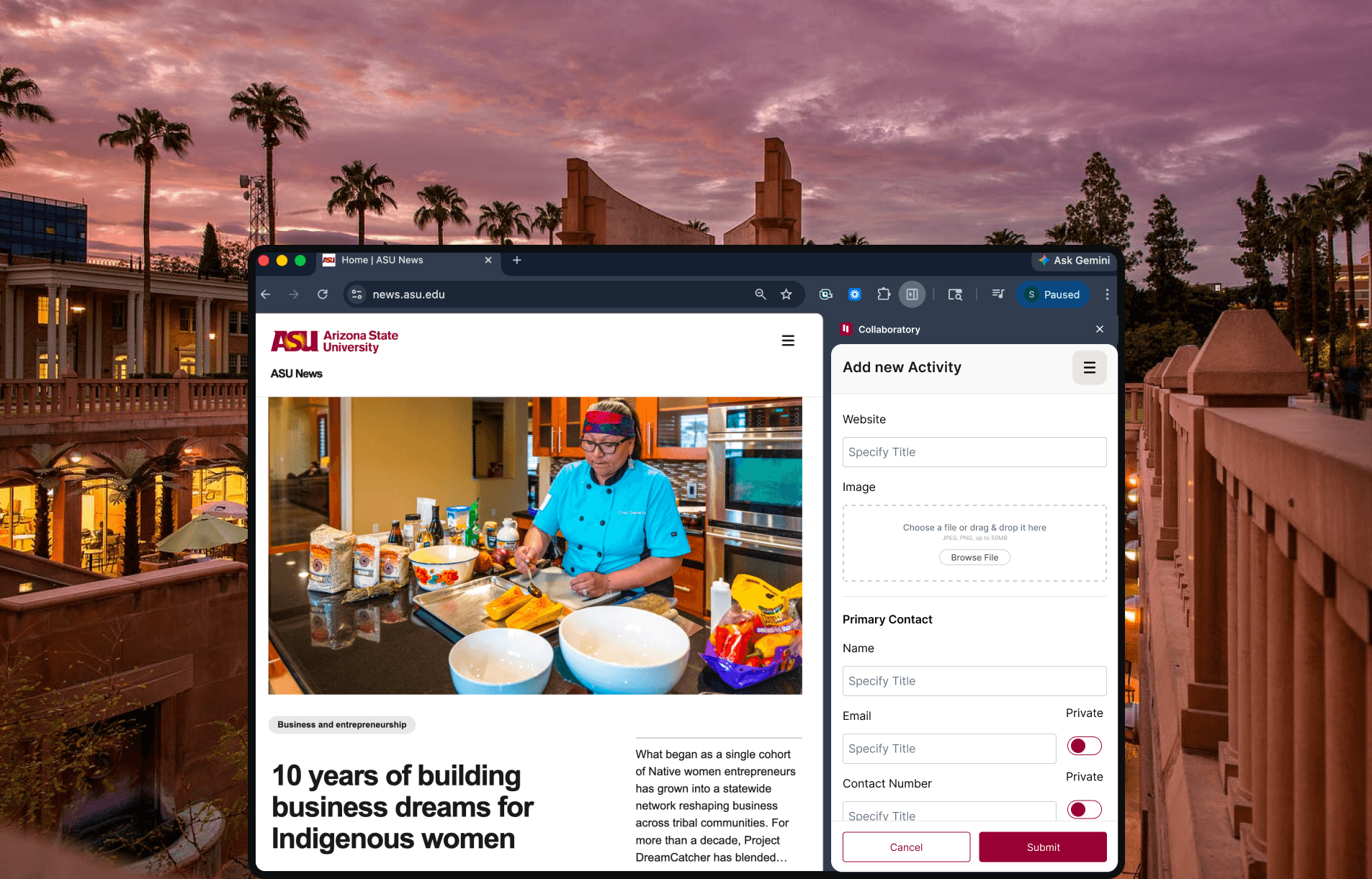
The Collaboratory serves as the vital record for the higher education community engagement. However, the platform’s success relies entirely on the quality and quantity of data inputted by student workers, a process known internally as "Proxying." I did it myself and realized we weren't asking students to be researchers; we were asking them to be human bridge-builders for data that was already digital. I took the initiative to pivot my focus. Instead of just tweaking the existing forms, I decided to bring the tool to the data. I proposed a shift in our technical strategy: The AI Proxying Plugin
Impact
0
,
0
+
ASU collaboration with community database
Saving
0
0
sec
Average processing time
Student Workers
0
+
Students are first point of contact
Key features
We built a system that doesn't just "talk" to you, but actually builds with you. We turned raw LLM data into structured, interactive components that feel like a conversation with a local friend.
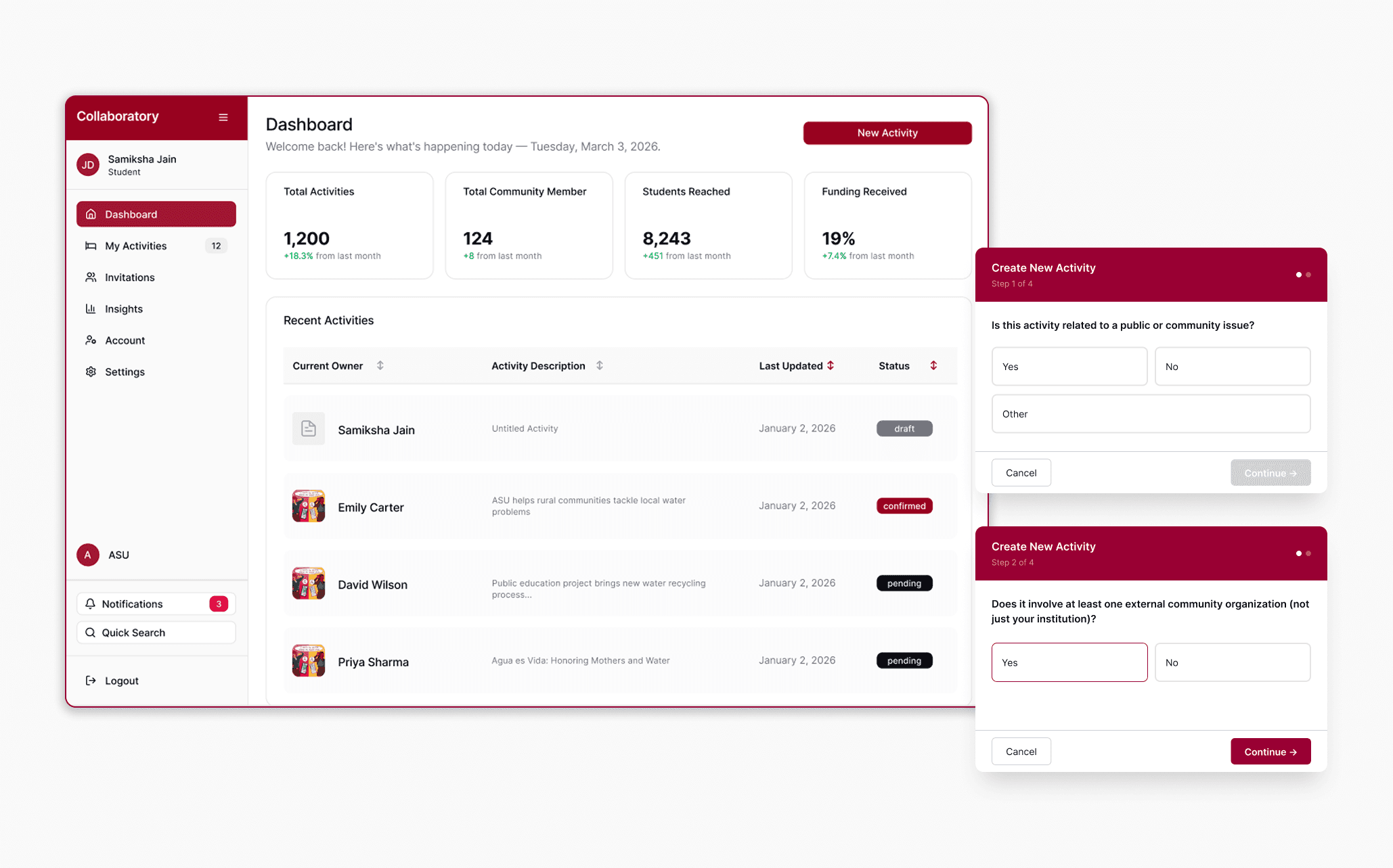
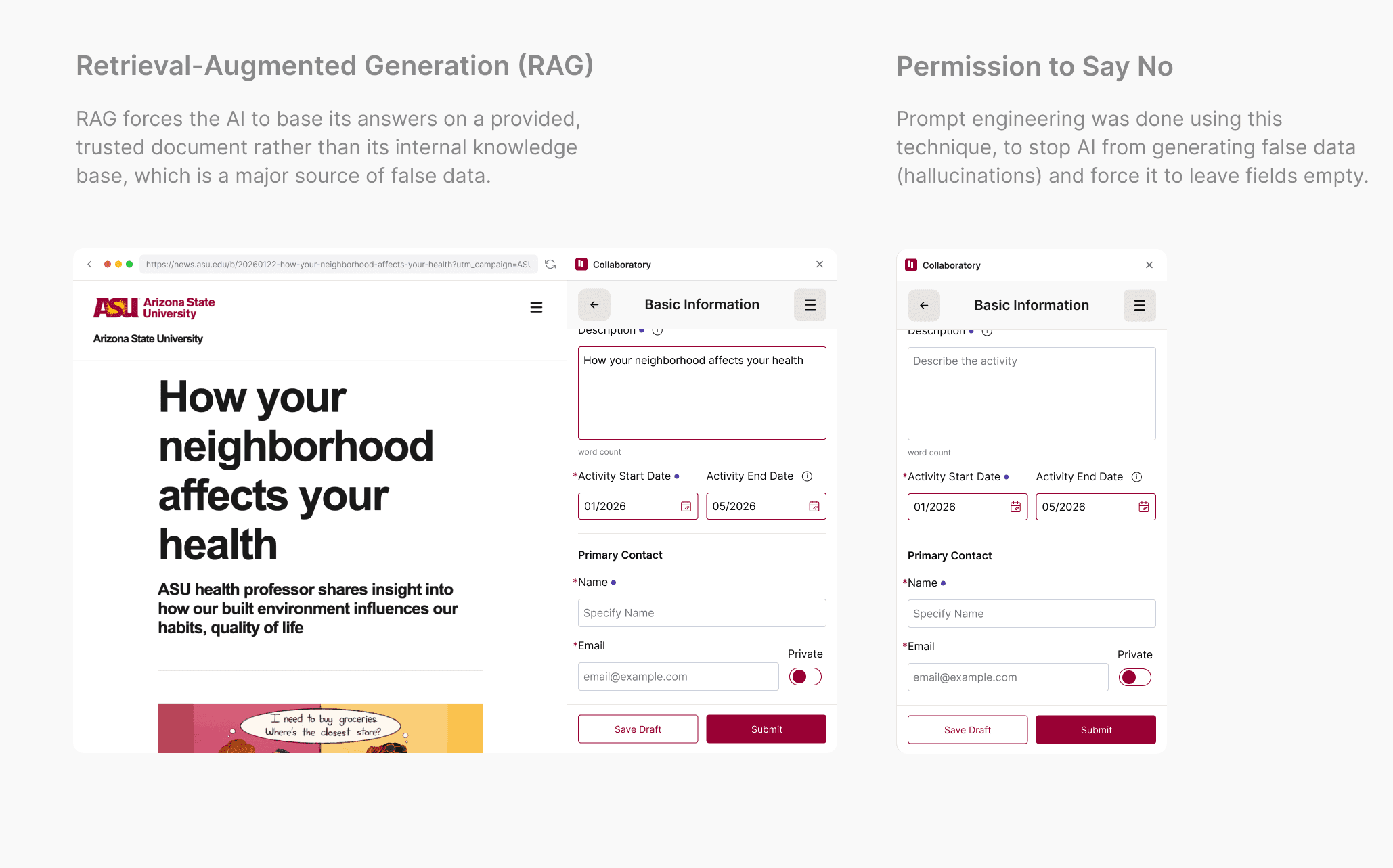
Each AI-generated response references supporting website content to ensure transparency and verification confidence, while analysis occurs independently of user activity so workflows continue uninterrupted.
Tradeoff: Adds interface and technical complexity but improves trust, verification, and workflow efficiency.